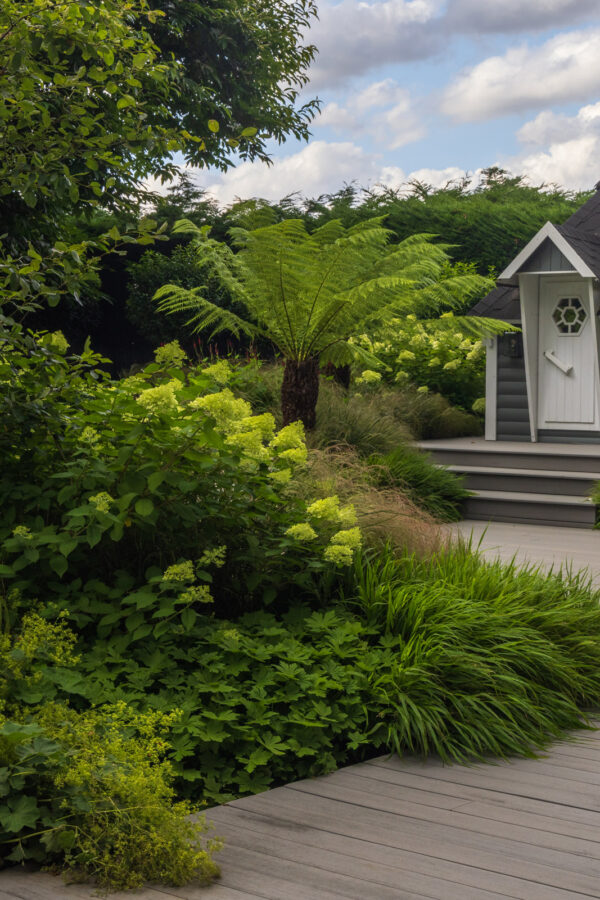
Creating Gardens That Are Beautiful, Practical and Enduring
When I design a garden, planting is only part of the story. The success of a space depends just as much on structure, materials and the careful placement of features. These elements determine how a garden is used, how it feels to move through and how well it matures over time.
Strong structure brings clarity. Thoughtful materials bring cohesion. Carefully positioned features create focus and atmosphere. Together, they transform an outdoor space into a garden that feels composed, functional and lasting.
This is often where professional design makes the greatest difference.
Structure as the Foundation of the Garden
Every successful garden begins with a clear framework. Structure gives shape and order, allowing planting to sit within a balanced composition rather than feeling incidental.
I consider how terraces relate to the house, how paths guide movement and how level changes are handled so they feel natural and well resolved. Seating areas, steps, walls and defined garden rooms all work together to establish proportion and rhythm.
A well structured garden feels intuitive. It supports daily life while creating moments of pause, outlook and enclosure.
Across Norfolk, Suffolk, Cambridgeshire and Essex, I design gardens that respond to both architecture and landscape, ensuring structure feels connected rather than imposed.
Choosing Materials with Care
Material selection influences both the character and longevity of a garden. The tone of stone, the texture of paving, the warmth of timber and the detailing of brickwork all contribute to the overall atmosphere.
When selecting materials, I consider:
- The style and age of the property
- The surrounding landscape
- Light conditions throughout the day
- Durability in local soil and weather conditions
- How surfaces will weather over time
A rural property may benefit from natural materials that soften into the landscape. A contemporary home may call for cleaner lines and restrained palettes. In every case, the aim is harmony rather than contrast for its own sake.
Careful material choice ensures the garden feels cohesive from the outset and continues to improve as it matures.
Garden Lighting and Atmosphere
Lighting is often overlooked, yet it has a profound effect on how a garden is experienced. Well planned lighting extends the use of the space into the evening while enhancing safety and visual interest.
I approach lighting with restraint and intention. The aim is not to flood the garden with light but to highlight structure, texture and focal points. Subtle illumination of pathways, gentle uplighting on specimen trees and soft washes across walls or planting create atmosphere without distraction.
Good lighting design allows the garden to feel inviting after dark while maintaining its sense of calm and balance.
Water Features and Focal Points
Water introduces movement, reflection and sound. When positioned thoughtfully, it can become the quiet centre of a design or a subtle accent within planting.
The placement of any feature is critical. A water element, sculpture or seating focal point must sit naturally within the overall composition. Scale, proportion and sightlines all need to be considered so that the feature enhances rather than dominates the space.
I design these elements as part of the whole garden, ensuring they feel integrated rather than added later.
Feature Placement and Spatial Balance
Every garden benefits from moments of focus. These may be structural features, changes in level, framed views or carefully positioned planting.
Feature placement is guided by how the garden is approached and experienced. I consider what is seen from inside the house, how the eye is drawn through the space and where visual pause is needed.
This considered approach prevents clutter and ensures that each element has purpose. The result is a garden that feels composed and confident rather than busy.
The Value of Professional Garden Design
Garden structures, materials and features require careful planning. Decisions made early in the design process influence not only appearance but also long term usability and cost.
By developing a clear, coordinated design, I ensure that structure, materials and focal elements work together from the outset. This avoids compromise during construction and results in a garden that feels resolved and enduring.
You can see how these principles are applied in my recent projects across East Anglia, where structure and material choices are carefully integrated into each design.
View Latest Projects