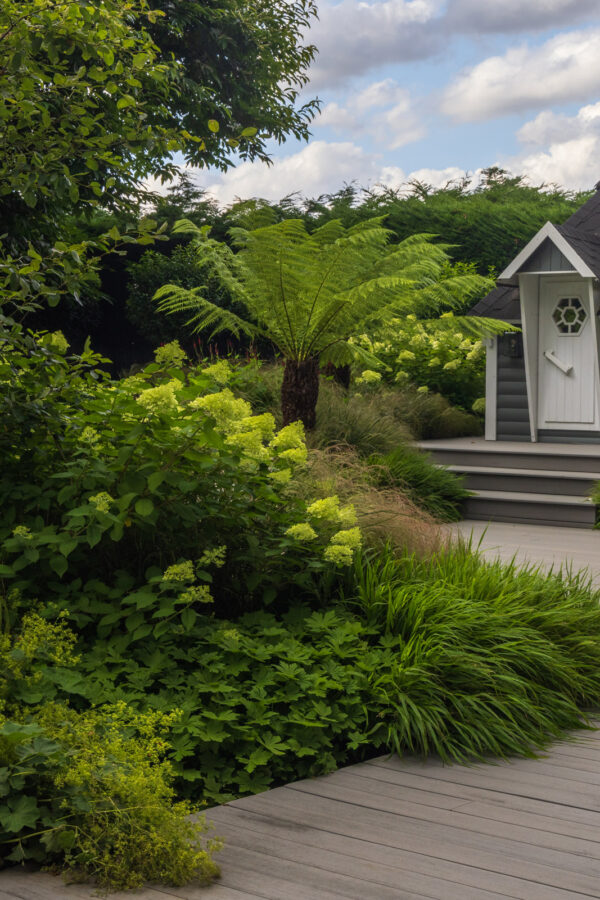
Planting is what gives a garden its life, movement and atmosphere. While structure provides the framework, planting is what brings emotion, texture and change throughout the year. A well planted garden feels considered and natural, developing with time rather than peaking briefly and fading.
Successful planting is not about choosing individual plants in isolation. It is about understanding how plants work together, how they respond to their environment and how they will evolve as the garden matures. When planting is planned carefully, it enhances the design rather than competing with it.
Chris Deakin approaches planting as an integral part of the overall garden design process. Every planting scheme is shaped by site conditions, lifestyle requirements and the desired long term feel of the garden. The principles below form the foundation of effective planting design.
Plant Selection Fundamentals
Good plant selection begins with purpose. Each plant should have a role within the garden, whether that is providing structure, softening hard edges, adding seasonal colour or creating rhythm through repetition.
Structure planting is often provided by trees, hedging and evergreen shrubs. These plants anchor the design and give the garden form throughout the year. Around this framework, softer planting introduces variation, movement and seasonal change.
Colour, texture and form must be considered together. Repeating plant shapes or foliage tones creates cohesion, while variation adds interest. A successful planting scheme balances contrast with harmony so the garden feels rich without becoming chaotic.
Plant longevity is also important. Choosing plants that will grow well in the given conditions reduces maintenance issues and allows the garden to develop naturally over time.
Seasonal Interest Planning
A well-designed garden should offer interest in every season, not just at one moment in the year. Seasonal planning ensures the garden evolves continuously, rewarding regular use and observation.
Spring brings freshness and energy through bulbs, blossom and early foliage. Summer provides fullness, colour and texture as borders reach their peak. Autumn introduces warmth through seed heads, grasses and changing leaf colour. Winter relies on structure, bark, evergreen foliage and carefully chosen forms.
Planning for seasonal interest involves layering plants with different flowering times and characteristics. It also means allowing some elements to remain in place after flowering, such as seed heads and grasses, to extend visual interest into colder months.
Seasonal planting creates rhythm and anticipation, making the garden feel alive and engaging throughout the year.
Soil and Aspect Considerations
Understanding soil and aspect is essential for successful planting. Soil type influences drainage, nutrient availability and root development, while aspect determines light levels, exposure and temperature.
Clay soils retain moisture and nutrients but can become compacted. Sandy soils drain quickly and may require additional organic matter. Chalk soils are free draining and alkaline, favouring specific plant types. Matching plants to soil conditions reduces stress and improves long term performance.
Aspect affects how plants grow and flower. South facing gardens receive more sun and warmth, while north facing spaces are cooler and more shaded. Wind exposure, particularly in coastal or open locations, must also be considered when selecting plants.
Designing planting that responds to these conditions ensures plants thrive rather than struggle, resulting in a healthier and more resilient garden.
Maintenance Levels
Every garden requires some level of care, but maintenance should be appropriate to the client’s lifestyle and expectations. A successful planting scheme balances beauty with practicality.
Low maintenance gardens rely on strong structure planting, limited plant palettes and species that require minimal intervention. Higher maintenance gardens may include more seasonal planting, detailed pruning and regular refinement.
Maintenance considerations include access, growth rates, pruning requirements and long-term plant behaviour. Designing with maintenance in mind avoids disappointment and ensures the garden remains enjoyable rather than demanding.
Clear planning at the design stage allows maintenance to be managed realistically and sustainably over time.
Planting as Part of a Cohesive Garden Design
Planting is most successful when it is planned alongside layout, structure and materials. Borders should relate to paths and terraces, planting should soften hard edges and trees should frame views and spaces.
When planting is treated as an afterthought, the garden can feel disconnected. When it is integrated from the outset, the result is a garden that feels complete and balanced.
Chris Deakin’s planting designs focus on longevity, atmosphere and harmony with the wider garden structure. Each scheme is tailored to the site, the setting and the people who will enjoy it. For examples of planting design applied to real gardens, explore the latest projects across Norfolk, Suffolk, Cambridgeshire and Essex, or get in touch to discuss how a considered planting scheme could enhance your own garden.