

Home - Journal - What plants should I choose for my garden?
What plants should I choose for my garden?
To ensure you have a thriving garden, it is essential that you choose the right plants. It’s important to take into consideration your aesthetic preferences, as well as the overall environmental conditions and maintenance needs your garden will require.
A well-planned garden with thoughtful and ideal planting will support the local wildlife and enhance your personal enjoyment of your outdoor space.
Your garden will soon become a place of tranquillity and relaxation. With my garden design services, I place importance on structuring your garden, I can help to bring your ideal garden to life, through understanding your individual garden and your lifestyle, to help understand which plants are best suited for both you and your garden.
Assessing your garden
It’s important to understand your local climate, for example in East Anglia the climate is generally considered to be dry and mild. Temperatures range from an average of 1-10°C in the winter, and 12-22°C in the summer, however it isn’t uncommon to experience the daily temperature to vary significantly below and above these averages.
Taking your local climate into account will help you to select the most suitable plants, which will thrive in your garden based on the temperature and weather conditions.
Similarly consider the amount of sunlight your garden receives, as well as where this sunlight hits throughout different points of the day. Again, after narrowing the selection of plants down to what will thrive in your local climate, you will then have to organise the plants based on which parts of your garden receive full sun, partial shade, and full shade.
While spending time getting to know your individual garden, it will be beneficial to identify your unique soil type. Whether your soil is sandy, clay, loamy, and if it has a high or low pH level, will all affect what you can plant, and where, as well as how you will look after these specific plants.
One way to identify your soil type is by getting hands-on, and touching it, rolling it in your hands. Alternatively, if you’re still not sure, a recommendation is to place some soil in a jar with vinegar, and if it froths, it contains free calcium carbonate (chalk) or limestone, and is lime rich.
To identify your soil’s pH, you will need two jars to add soil to, one with baking soda and one with vinegar. If the baking soda mixture bubbles you likely have acidic soil; and if the vinegar mixture bubbles, then you likely have alkaline soil.
Once you’ve really narrowed down the plants that will survive in your garden, it’s time to think about the size and layout of your garden. This will impact how you choose what plants to put where, and what you wish your final garden to look like.
While you’ve taken into consideration the overall climate of the local area you live in, your garden may also have varied conditions – considered ‘microclimates’ – and will be impacted by the size, shape, and layout of your garden.
Types of plants to consider
- Perennials: These are long-lasting plants that return year after year. British weather can be quite unforgiving, and perennials can be a reliable plant which has a hardiness of H7 by the RHS (meaning it is hardy down to -20°C).
- Annuals: Seasonal plants, which offer vibrant blooms but require replanting annually.
- Shrubs and Trees: These play an important role in providing garden structure, shade, and overall long-term garden design. They can grow to become natural garden section dividers, or help to introduce areas of convenient shade for the warmer parts of the day.
- Edible Plants: If you are wanting a functional garden, with the ability to grow your own food, you can consider different types of vegetables, fruits, and herbs. Different herbs can be helpful in bringing different smells to sections of your garden, with mint, rosemary, lavender, chamomile, and pineapple sage all being different options for an aromatic experience.
- Wildlife-Friendly Plants: Caring about the environment and bringing wildlife to your garden can really help bring it to life. Plants such as Primrose, Ivy, Honeysuckle, and Sunflowers can bring bees, butterflies, and other wildlife to your garden.
Plants based on specific needs
Low-Maintenance Plants
There are a number of plant species that take care of themselves, a good option for if you are typically someone who doesn’t have much time to spare, then you may want to consider low maintenance plants for your garden.
Hardy geraniums are almost indestructible, and they require no deadheading (instead just cut right back to the ground after the first flush of flowers). These plants also have the potential to flower for months on end.
Bulbs are easy planters too, and there’s a wide variety of species available from spring-flowering crocus, daffodils, and snowdrops, to summer-flowering alliums and lilies.
Shade-Tolerant Plants
These plants are great for shaded north- or east-facing gardens, or even spots under trees. If your garden is surrounded by taller buildings then you may want to consider shade-tolerant plants such as:
- Perennials for deep shade, such as Acanthus mollis, Alchemilla mollis AGM, Geranium nodosum, Hostas, Euphorbia amygdaloides var. robbiae, Dyropteris willichiana, Epimedium x youngianum ‘;’Niveum’, Anemone x hybrida ‘Honorine Jobert’, Millium effusum ‘Aureum’.
- Perennials for lighter or dappled shade, such as Aruncus docs, Primula beesiana, or Meconopsis baileyi AGM, Alchemilla mollis, Acer palatum, Hyrangea quercifolia, Tiarella cordifolia, Astrantia major.
- Or other options such as shade-tolerant ferns, grasses, bulbs, and annuals/biennials.
Drought-Resistant Plants
Drought-resistant plants are useful for growing in sunny borders with free-draining soil. They’re also great for low-maintenance planting schemes or within container displays. Drought-tolerant plants have evolved to thrive in dry soils with little rainfall. Look for varieties such as Agapanthus ‘Silver Baby’, Anchusa azurea, Cotyledon orbiculata, or Geums for your dry environment.
Native Plants
By planting native plants, you’re also working towards a garden that is great for local wildlife and the environment. Using East Anglia as an example, the native plants in this region include Anthemis arvensis (Corn Chamomile), Galium odoratum (Sweet Woodruff), Linaria vulgaris (Common Toadflax), Limonium vulgare (Sea Lavender). By conserving and celebrating local flowers, you help to showcase the region’s natural beauty.
Design your perfect garden and choose the right plants with Chris Deakin
By being able to prioritise the individual needs of your unique garden, I am able to ensure it is as beautiful and inviting as you envision, working together to bring your dream garden to reality.
Get in touch with me today to start planning your garden transformation in Norfolk, Suffolk, Cambridgeshire, and Essex.
Home - Journal - What plants should I choose for my garden?
Discover More About My Recent Projects For Design Inspiration
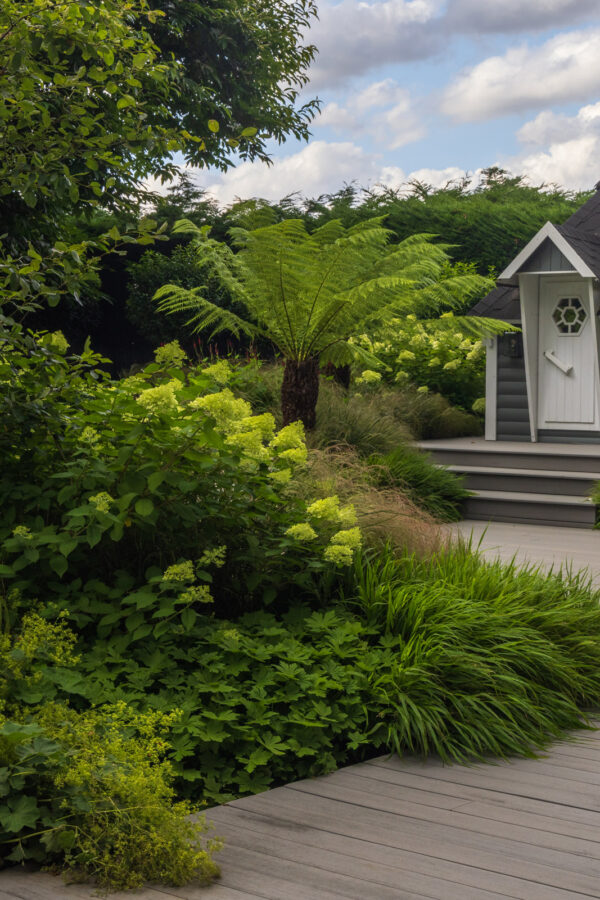
Norfolk Woodland Garden
This beautiful family home on the edge of Norwich, was built amongst a number of wonderfully established trees, giving the site a woodland feel.
Read More
Suffolk Contemporary Cottage Garden
A contemporary retreat blending tradition with modern design.
Read More
Norfolk Contemporary Flint House
A beautiful, contemporary flint house situated in a small village in North Norfolk
Read More
Norfolk House in the Norfolk Broads
Beautiful thatched, brick farmhouse, situated in the heart of the Norfolk Broads.
Read MoreBring your garden to life with Chris Deakin
Whether your vision is a traditional garden design with luscious vegetation, a small urban courtyard garden stylishly overflowing with impact and form, or country garden elegantly floating with delicate, whimsical planting, he will bring light and life into your garden.
© 2026 Chris Deakin | Privacy Policy | Cookie Policy | Locations | Sitemap