

A north facing garden is sometimes seen as slightly difficult to design and plant successfully. With less direct sunlight than a south facing space would give you, it is very easy to assume that your choice of plants will be a bit more limited or that creating a colourful and interesting garden will be harder.
In reality though, north facing gardens can be wonderfully atmospheric. The softer light and cooler conditions actually suit an enormous range of beautiful plants, from lush ferns and architectural foliage to flowering shrubs and shade tolerant perennials.
The key is to work with the conditions you have rather than trying to force the creation of a garden that behaves like a sunny, south facing plot.
At Chris Deakin Garden Design, planting is considered as part of the wider garden design, taking into account factors such as light, soil, architecture and proportions. This is even ore important in Norwich and across Norfolk, where local soil conditions can vary considerably from one garden to another.
What Does a North Facing Garden Mean for My Plants?
A north facing garden usually receives considerably less direct sunlight because the house or the surrounding buildings cast shade across at least part of the space.
However, this does not necessarily mean that the entire garden is permanently dark.
The amount of light available will depend on many different factors, including the height of your property, any neighbouring buildings, the size of the garden and the time of year you plan to get started.
A longer north facing garden may receive more direct sunlight towards its far boundary, particularly during the summer months. Other areas may experience dappled or partial shade rather than deep shade.
Before you actually choose any plants, it is therefore worth taking some time to observe your garden right throughout the day.
Rather than just asking whether a plant tolerates shade, consider exactly what kind of shade you have.
What Are the Best Plants for a North Facing Garden?
Some of the best plants for a north facing garden are species naturally adapted to woodland floors and other environments where direct sunlight is a bit more limited.
These types of plants do not just tolerate shade, many of them actively thrive in it.
A successful planting scheme will usually hit the perfect combination of plants of different heights and textures, along with diverse flowering periods rather than just relying on one particular type.
Ferns
Ferns are an excellent choice if you are looking to bring some added texture and softness to a shady garden.
Their intricate foliage works particularly well beneath trees, and in sheltered borders where other plants often struggle.
Good choices here include Dryopteris, Polystichum and Asplenium varieties.
Ferns can also help with the creation of a wonderfully lush appearance when they have been planted in groups rather than just dotted individually around a border.
Combining different forms and shades of green prevents a shady planting scheme from feeling a bit flat, even when there are not that many plants that are flowering.
Hostas
Hostas are among some of the most well-known plants for shade, and for a very good reason.
Their large and distinctive looking leaves can provide a tremendous visual impact, with varieties available in different greens and blues.
Hostas work particularly well when they have been contrasted against plants with finer foliage, as this difference in texture creates interest without the need for lots of bright flowers.
They generally prefer moisture retentive soil and can be more vulnerable to slugs and snails, so their position and surrounding planting should always be considered very carefully.
Hydrangeas
Hydrangeas can bring significant levels of colour and structure to a north facing garden, as many varieties are comfortable in partial shade and will produce generous flowers during summer and then into autumn.
Hydrangea macrophylla is a familiar choice, while Hydrangea paniculata can provide a different flower shape with more of an architectural presence.
Hydrangeas can be very useful where you want a substantial shrub to provide some structure rather than having to completely rely on smaller perennials.
In larger Norfolk gardens, they can also work beautifully as part of generous mixed borders where shrubs and perennials are layered together.
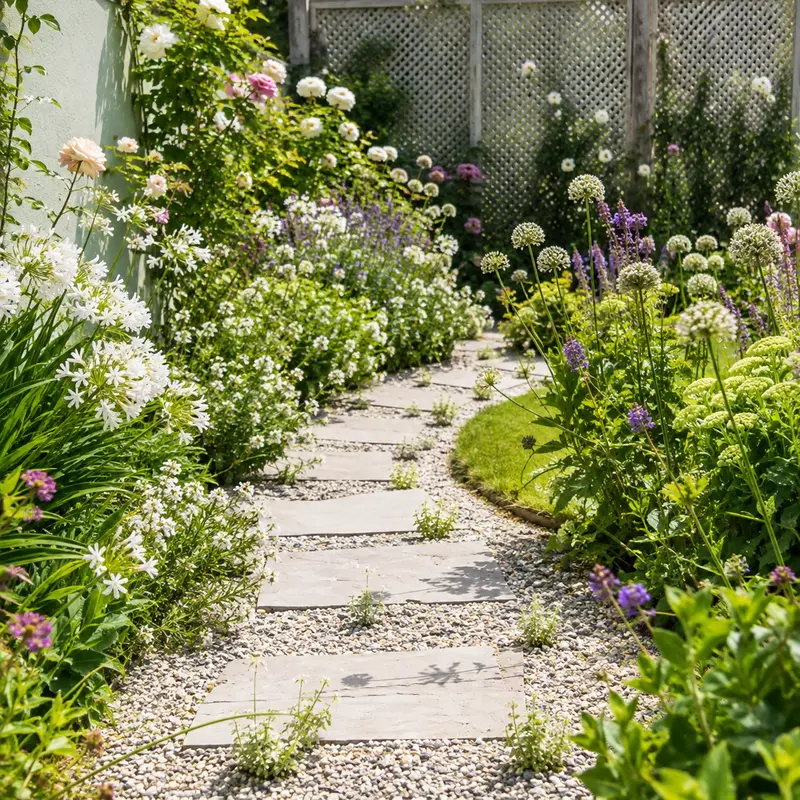
A north facing garden is sometimes seen as slightly difficult to design and plant successfully. With less direct sunlight than a south facing space would give you, it is very easy to assume that your choice of plants will be a bit more limited or that creating a colourful and interesting garden will be harder.
In reality though, north facing gardens can be wonderfully atmospheric. The softer light and cooler conditions actually suit an enormous range of beautiful plants, from lush ferns and architectural foliage to flowering shrubs and shade tolerant perennials.
The key is to work with the conditions you have rather than trying to force the creation of a garden that behaves like a sunny, south facing plot.
At Chris Deakin Garden Design, planting is considered as part of the wider garden design, taking into account factors such as light, soil, architecture and proportions. This is even ore important in Norwich and across Norfolk, where local soil conditions can vary considerably from one garden to another.
What Does a North Facing Garden Mean for My Plants?
A north facing garden usually receives considerably less direct sunlight because the house or the surrounding buildings cast shade across at least part of the space.
However, this does not necessarily mean that the entire garden is permanently dark.
The amount of light available will depend on many different factors, including the height of your property, any neighbouring buildings, the size of the garden and the time of year you plan to get started.
A longer north facing garden may receive more direct sunlight towards its far boundary, particularly during the summer months. Other areas may experience dappled or partial shade rather than deep shade.
Before you actually choose any plants, it is therefore worth taking some time to observe your garden right throughout the day.
Rather than just asking whether a plant tolerates shade, consider exactly what kind of shade you have.
What Are the Best Plants for a North Facing Garden?
Some of the best plants for a north facing garden are species naturally adapted to woodland floors and other environments where direct sunlight is a bit more limited.
These types of plants do not just tolerate shade, many of them actively thrive in it.
A successful planting scheme will usually hit the perfect combination of plants of different heights and textures, along with diverse flowering periods rather than just relying on one particular type. Aspect is only one consideration when deciding what plants to choose for your garden, with soil, moisture, available space and the overall style of the planting scheme also playing an important role.
Ferns
Ferns are an excellent choice if you are looking to bring some added texture and softness to a shady garden.
Their intricate foliage works particularly well beneath trees, and in sheltered borders where other plants often struggle.
Good choices here include Dryopteris, Polystichum and Asplenium varieties.
Ferns can also help with the creation of a wonderfully lush appearance when they have been planted in groups rather than just dotted individually around a border.
Combining different forms and shades of green prevents a shady planting scheme from feeling a bit flat, even when there are not that many plants that are flowering.
Hostas
Hostas are among some of the most well-known plants for shade, and for a very good reason.
Their large and distinctive looking leaves can provide a tremendous visual impact, with varieties available in different greens and blues.
Hostas work particularly well when they have been contrasted against plants with finer foliage, as this difference in texture creates interest without the need for lots of bright flowers.
They generally prefer moisture retentive soil and can be more vulnerable to slugs and snails, so their position and surrounding planting should always be considered very carefully.
Hydrangeas
Hydrangeas can bring significant levels of colour and structure to a north facing garden, as many varieties are comfortable in partial shade and will produce generous flowers during summer and then into autumn.
Hydrangea macrophylla is a familiar choice, while Hydrangea paniculata can provide a different flower shape with more of an architectural presence.
Hydrangeas can be very useful where you want a substantial shrub to provide some structure rather than having to completely rely on smaller perennials.
In larger Norfolk gardens, they can also work beautifully as part of generous mixed borders where shrubs and perennials are layered together.
Hellebores
Hellebores are particularly valuable because they provide interest when the majority of the garden is relatively quiet.
Often flowering during the winter months and in early spring, they can produce elegant blooms in shades ranging from white and pale pink through to deeper purple.
They are well suited to woodland style planting and look particularly effective when allowed to sit naturally amongst ferns, bulbs and other shade loving plants.
Their evergreen or semi evergreen foliage, depending on the variety and conditions, can also contribute structure beyond their flowering season.
Japanese Anemones
For later colour, Japanese anemones can be a really excellent addition to a north facing border, as their elegant flowers appear on tall stems and can bring movement to planting during late summer and autumn.
They can be particularly effective when they are incorporated into relaxed planting schemes where they can weave between other perennials.
Given suitable conditions, they can spread over time, so it is worth considering how much space you want them to occupy within the wider design.
Heucheras
Heucheras demonstrate why designing a shady garden does not have to mean completely relying on green.
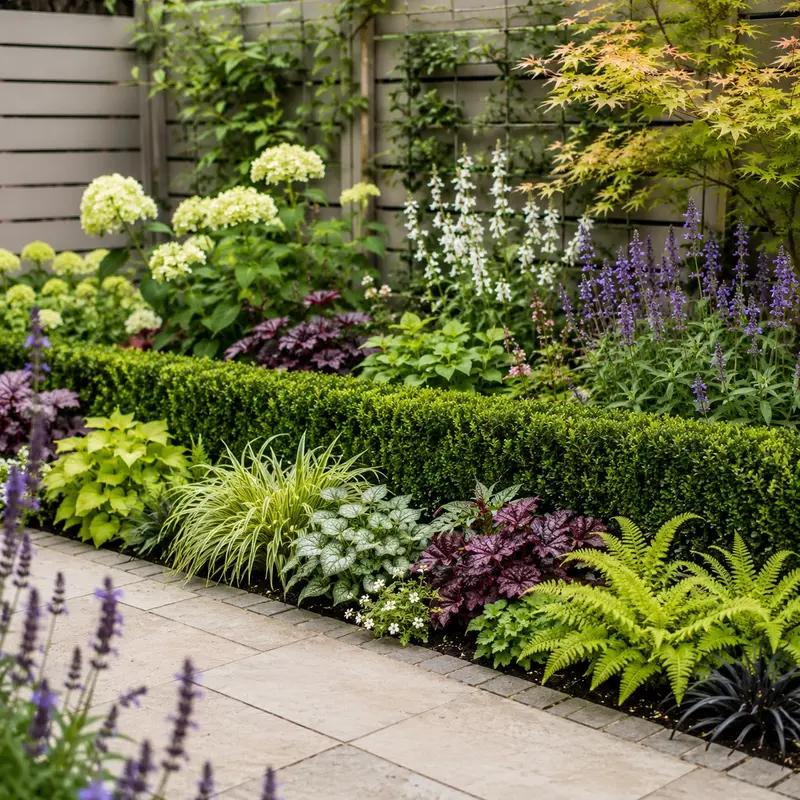
The primary reason they are grown is for their attractive foliage, which is available in an impressive range of colours including lime green, purple and a deep burgundy.
This means that they can be very useful for introducing colour into areas where flowering plants may be less abundant.
Their relatively compact size also makes them quite useful towards the front of borders or as part of layered planting around larger shrubs.
Astrantias
Astrantias can be particularly beautiful in gardens where you want a slightly softer and more naturalistic feel.
Their delicate flowers sit above attractive foliage and will work really well alongside ferns and hostas, as they are both shade tolerant perennials.
They generally appreciate soil that retains some moisture, which makes them particularly suitable for cooler areas of the garden that do not dry out rapidly in strong sunshine.
They can also help create the loose, romantic quality that works so well in traditional cottage gardens and more contemporary naturalistic planting schemes.
Foxgloves
Foxgloves are naturally associated with woodland edges, making them an obvious candidate for gardens with partial or dappled shade.
Their tall flower spikes provide valuable vertical interest and contrast beautifully with lower foliage.
Traditional purple foxgloves can look wonderful in informal gardens, while cultivated varieties offer a broader range of colours.
They are particularly effective when allowed to appear naturally through a planting scheme rather than being arranged too rigidly.
Brunnera
Brunnera is another excellent plant if you are looking to build out a shady border.
Its small blue spring flowers are reminiscent of forget me nots and the foliage will provide interest for considerably longer.
Varieties with silver or patterned leaves can be especially useful if you have some darker corners that need a bit of brightening.
This illustrates an important principle when it comes to choosing the best plants for a north facing garden, and that is that foliage can be every bit as important as flowers.
Climbers for North Facing Walls
Walls and fences will usually represent quite significant proportion of a smaller north facing garden, so choosing suitable climbers can transform the appearance of the space.
Certain climbing hydrangeas are particularly well suited to shade and can eventually cover substantial areas.
Some varieties of clematis can also perform very well when direct sunlight is limited.
Rather than leaving a boundary looking bare, vertical planting can make the garden feel a bit greener and more established while softening fences and brickwork.
How Do You Make a North Facing Garden Look More Colourful?
One of the most common concerns when it comes to north facing gardens is that they will look overwhelmingly green.
And I would say that there is nothing wrong with green, in fact, layering different shades and textures of foliage can create an exceptionally sophisticated garden.
However, there are plenty of opportunities to introduce some additional shades of colour.
Hellebores can provide winter and early spring flowers and Brunnera can introduce a delicate spring colour. Hydrangeas can be on hand to provide an impressive summer display, while Japanese anemones will extend interest towards autumn.
Colour can also come from foliage.
Heucheras, variegated hostas and silver-leaved Brunnera varieties will allow you to create some lovely looking contrast even when relatively little is flowering.
The result here can be a garden that changes subtly throughout the year rather than having to rely on one enormous burst of summer colour. Choosing plants for year-round interest can help ensure there is always something contributing colour, texture or structure to the garden.
Think Beyond Each Individual Plant
Choosing suitable plants is only part of designing a successful north facing garden.
The difference between a collection of shade tolerant plants and a beautifully designed garden will often come down to composition, so always consider how plants relate to one another.
A large leaf hosta can contrast with the delicate fronds of a fern. Tall foxgloves can rise through lower planting and Hydrangeas can provide structure behind smaller perennials, while ground level plants can soften paths and the edges of borders.
Repetition is very important too, as repeating plants or combinations at intervals creates a nice rhythm and makes the garden feel cohesive rather than fragmented.
At Chris Deakin Garden Design, this relationship between planting and the wider space is fundamental to the design process. The aim is not to just fill an empty border, but to create a garden where planting, hard landscaping, architecture and the surrounding landscape feel connected.
Designing a North Facing Garden in Norwich or Norfolk
Local conditions should always have a large influence on your planting decisions.
Gardens where I am from in Norwich and the wider Norfolk area vary considerably. A sheltered Norwich city garden enclosed by neighbouring properties can present very different conditions from an exposed rural garden or a property closer to the Norfolk coast.
Soil is also something important that needs to be considered carefully
Before establishing a substantial new planting scheme, it is worth gaining a solid understanding of how freely your soil drains and how well it retains moisture along with understanding whether particular parts of the garden behave differently after prolonged rain or dry weather.
The right plant in the right place will nine times out of ten perform better and require less intervention than a plant constantly struggling against unsuitable conditions.
For this very reason, a north facing aspect should always be viewed as just one part of the garden rather than its defining limitation.
Embrace the Character of a North Facing Garden
There is no need to fight a north facing garden.
Shade provides you with opportunities to create something very distinctive.
Lush foliage and elegant woodland planting paired with restrained colour palettes helps to create spaces that feel peaceful, sophisticated and beautifully established.
The best plants for a north facing garden are usually those that are well suited to the particular conditions of your space and contribute to the overall design.
By considering light, soil, scale, texture, structure and seasonal interest together, a perceived limitation can become one of the garden’s greatest strengths.
Chris Deakin Garden Design creates bespoke gardens in Norwich, throughout Norfolk and further afield, developing planting schemes around the individual character of each property and the way its owners want to experience their outdoor space.
Frequently Asked Questions
What plants grow best in a north facing garden?
Ferns, hostas, hellebores, hydrangeas, Brunnera, Heucheras, Astrantias and Japanese anemones are among the many plants that can perform well in north facing gardens. The best choice will depend on the precise amount of light, soil conditions and moisture available.
Can you have colourful plants in a north facing garden?
Yes. Shade tolerant plants can provide flowers in a wide variety of colours, while plants such as Heucheras and variegated hostas can introduce colour through their foliage.
Do hydrangeas grow in north facing gardens?
Many hydrangeas can grow successfully in partial shade, making them a useful choice for north facing gardens. Their suitability will also depend on factors including soil, moisture and the amount of available light.
What can I plant against a north facing wall?
Climbing hydrangeas and certain varieties of clematis are among the options worth considering for north facing walls. The precise conditions at the wall should be considered before choosing a climber.
Can a north facing garden still get sun?
Yes. North facing does not automatically mean permanent shade. Longer gardens can receive direct sunlight towards their boundaries, particularly during summer, while other areas may experience partial or dappled shade.
How can I make a north facing garden look brighter?
Plants with pale flowers, variegated leaves and silver or lime coloured foliage can help brighten shady areas. Thoughtful hard landscaping, contrasting textures and careful placement of plants can also make the space feel lighter.
Are north facing gardens difficult to design?
They can present different considerations from sunnier gardens, but they are not inherently more difficult. Understanding the available light and selecting plants that naturally thrive in those conditions can create an exceptionally attractive garden.
Norfolk Woodland Garden
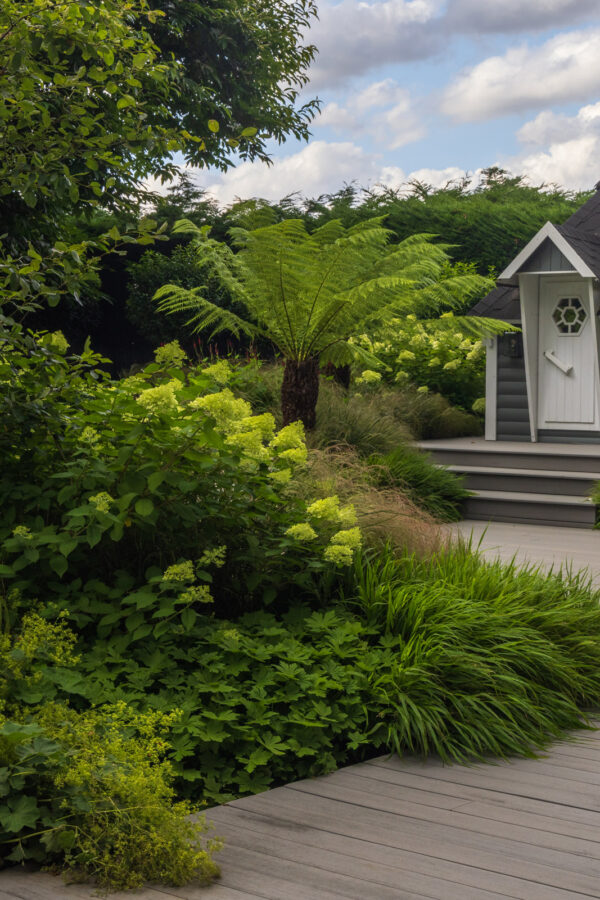
This beautiful family home on the edge of Norwich, was built amongst a number of wonderfully established trees, giving the site a woodland feel.
Read More
Suffolk Contemporary Cottage Garden
A contemporary retreat blending tradition with modern design.
Read More
Norfolk Contemporary Flint House
A beautiful, contemporary flint house situated in a small village in North Norfolk
Read More
Norfolk House in the Norfolk Broads
Beautiful thatched, brick farmhouse, situated in the heart of the Norfolk Broads.
Read More