

Your front garden is one of the first things you see when you arrive home after a long day at work. It is also one of the first impressions visitors will have of your property. Yet, when people think about redesigning their outdoor space, it is often the back garden that receives most of their attention.
A well designed front garden can completely change how a property feels. It can create a more welcoming entrance and can complement the architecture of the house.
If you are wondering how to design a front garden, the best place to begin is not by choosing plants or paving. Start off by thinking about what the space needs to achieve and how it should relate to your home. Getting the overall garden layout right at this stage can make it much easier to balance practical requirements with the way you want the space to look.
Start With the Style of Your Home
A successful front garden should feel as though it belongs with the property rather than being a completely separate space.
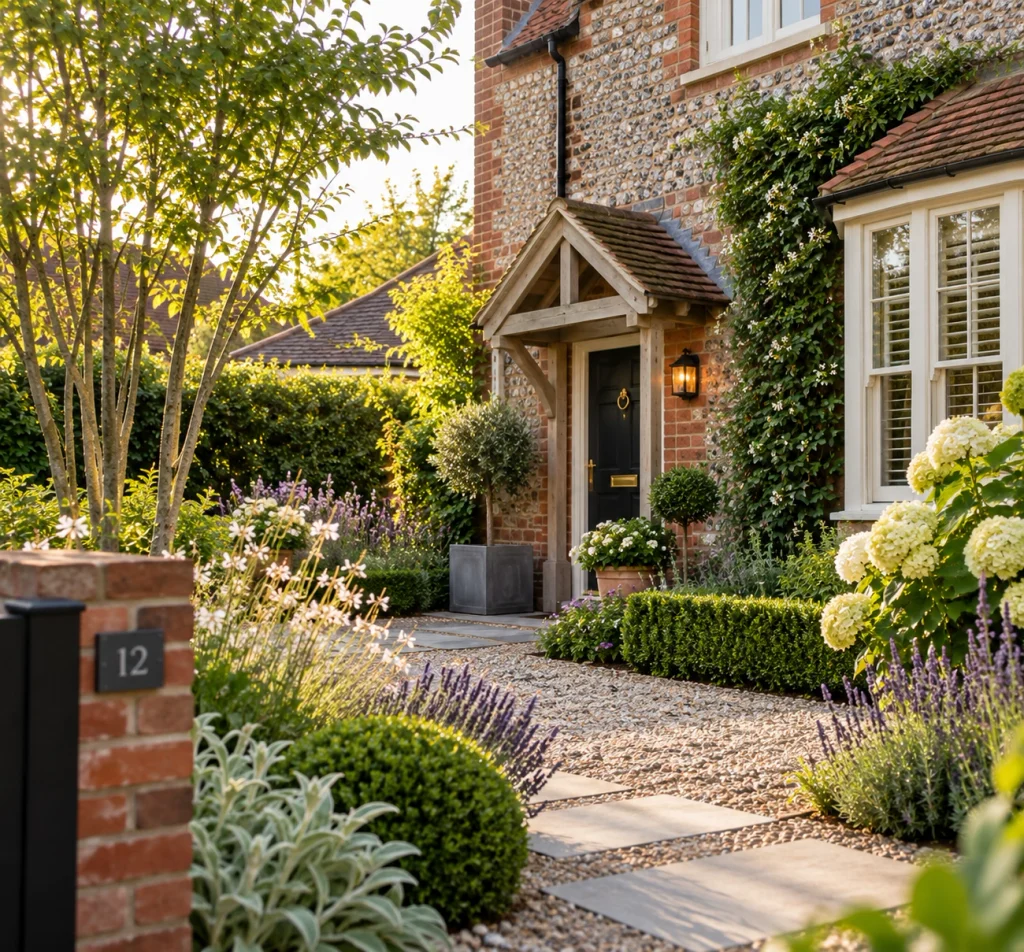
Have a detailed look at the architecture, materials, colours and proportions of your home. A contemporary property might suit strong geometric lines and restrained planting along with large areas of carefully chosen paving. On the other hand a period home may benefit from softer planting and traditional materials with a slightly less formal layout.
This is particularly relevant where I do most of my design work, across Norwich and Norfolk, where properties range from historic city terraces to flint cottages and barn conversions in the countryside.
The garden does not necessarily need to replicate the exact style of the building, as contrast can actually be extremely effective. However, there should be some relationship between the two so that the overall composition feels intentional.
Decide What Your Front Garden Needs to Do
Before you start thinking about how your front garden will look, consider how you need to use it.
For some homes, the front garden is almost entirely decorative. For others, it needs to accommodate several practical requirements.
These requirements might include:
- Off street parking
- A clear route to the front door
- Bin storage
- Bicycle storage
- Screening from neighbouring properties
- Privacy from the road
- Space for deliveries
- Lighting and security
- Easy access for children or older family members
Thinking carefully about these requirements early prevents practical necessities from feeling like they are just an afterthought.
For example, bins can often be screened with the use of attractive planting or incorporated into purpose built storage. Parking can be softened by breaking up larger areas of hard landscaping with planting beds rather than turning the entire frontage into paving.
Good front garden design finds a balance between function and appearance.
Make the Front Door the Focus
In most front gardens, the entrance to the house should provide a natural focal point.
Visitors should instinctively be able to understand where to walk without needing to think about it. The layout, pathway and planting are all clever ways of subtly guiding people towards the front door.
A direct path may work beautifully with a formal or contemporary property, while a slightly more relaxed route can suit a cottage or rural home.
The width of the path really matters too, as a narrow path can feel a little restrictive, particularly when it is also bordered by dense planting. This is why, providing a little more space often makes the entrance feel considerably more generous and welcoming.
Planting, use of pots, or a change in paving around the doorway can then reinforce the entrance and can give it greater visual importance.
Think Carefully About Hard Landscaping
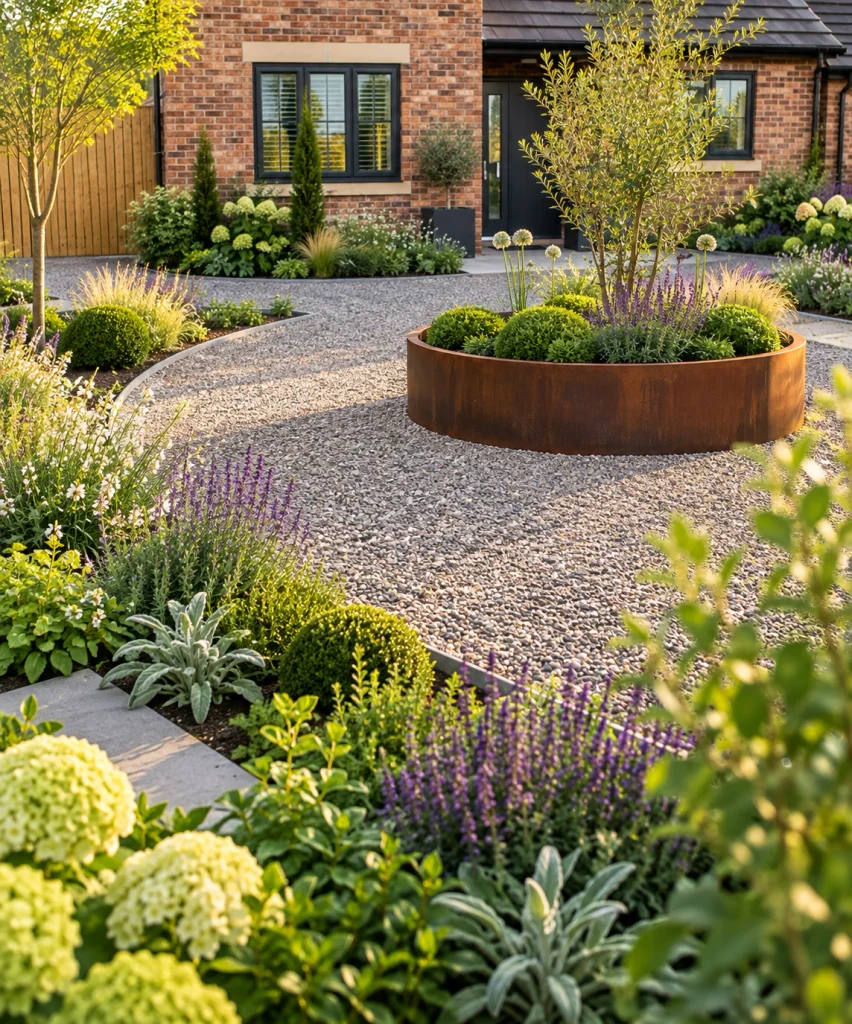
Hard landscaping often occupies a significant proportion of a front garden, particularly where you also have to account for parking.
The materials that you choose therefore have a considerable influence on the finished design.
Using stone, gravel or brick can all work really well in the right setting, but the important thing is to consider how the material relates to the house and surrounding landscape.
In Norfolk, locally appropriate materials can be particularly effective when working with more traditional properties. Flint, natural stone and gravel can establish a visual connection between the garden and the architecture of the area.
I would say to try to avoid introducing too many different materials into a small space, as a restrained palette usually creates a calmer and more coherent design.
Use Planting to Soften the Space
Planting is usually what really transforms a functional front garden into somewhere that possesses genuine character.
Even relatively small planting areas can make a significant difference. A well-designed garden border can be particularly effective, as it brings colour, texture and structure to the edges of paths and driveways.
Plants can soften the edges of driveways and can frame an entrance, they can also be very useful when it comes to providing privacy and introducing seasonal interest. Trees and larger shrubs can also help balance the scale of a property, particularly where the house would otherwise dominate the garden.
Rather than choosing individual plants just because you like the look of them, think about the planting scheme as a whole.
Consider height, shape and texture, along with colour and how the garden will change throughout the year. Repeating certain plants throughout the space can help create a nice rhythm and can make the design feel much more cohesive.
Evergreen plants can provide useful structure through winter, while perennials, bulbs and ornamental grasses introduce changing colour and texture throughout the seasons.
Consider Privacy Without Creating a Fortress
Privacy is a common concern when designing a front garden, particularly for properties close to pavements or to busier roads.
However, keeping the front of the property completely enclosed is not always the best solution, as tall solid fencing can make a small front garden feel quite confined and may separate the house too strongly from its surroundings.
Planting can provide a softer alternative. Hedges, trees and layered shrubs can filter views rather than blocking them completely, which can create a greater sense of privacy while still allowing light to flow into the house.
The right solution will completely depend on the property, the road and how exposed the garden feels.
Do Not Forget About Lighting
Front garden lighting has both practical and aesthetic purposes.
Lighting paths and entrances makes the garden much easier and safer to navigate when it gets dark and carefully positioned lighting can also highlight planting or architectural features.
The key here though is using restraint.
A front garden rarely needs to be brightly illuminated. Several carefully positioned lights will usually create a more sophisticated result than lighting every path, wall and plant.
Warm, subtle lighting can make the entrance feel welcoming while allowing the garden to take on a different character in the evening.
How Do You Design a Small Front Garden?
You will find that small front gardens will benefit enormously from simplicity, as many of the same principles used when designing a small garden will apply here, particularly when it comes to making every part of the available space work effectively.
Trying to include too many features can quickly start to make a limited space feel cluttered. Instead, why not choose a small number of strong elements and execute them well?
A clear path and carefully positioned planting paired with one or two attractive materials may be all that is required.
Vertical space can also be very useful. Climbers, narrow trees and carefully maintained hedging can introduce greenery without occupying too much valuable ground.
In the centre of Norwich, where many city and suburban properties have relatively compact front gardens, even modest spaces can make a considerable contribution to the appearance of a home when every element has been considered very carefully.
Design for Every Season
It is easy to imagine what a garden will look like at its peak in late spring or summer, but your front garden is something you will see all the way throughout the year.
A strong design should therefore retain structure and interest during autumn and winter too.
Evergreen shrubs and hedging, along with trees with attractive bark and ornamental grasses can work niceley. Hard landscaping also becomes more visually prominent when plants die back, which is another reason why the underlying layout and materials are so important.
Thinking across all four seasons creates a front garden that continues to feel considered even in the middle of winter.
Create a Front Garden That Belongs to Your Home
There isn’t a one size fits all formula for how to design a front garden successfully.
The best designs are ones that respond to the individual property, its surroundings and the people who are living there. A small Norwich terrace will require a completely different approach from a larger country home in North Norfolk.
At Chris Deakin Garden Design, front gardens are considered as part of the wider relationship between the home and its landscape. Practical requirements, architecture, materials and planting are brought together to create a space that feels both functional and beautifully composed.
With careful planning, even a relatively simple front garden can completely transform the experience of arriving home and significantly improve the character of the property. A thoughtfully landscaped garden can also add value to your property by improving its appearance and creating a stronger first impression.
Frequently Asked Questions About Front Garden Design
What should I consider when designing a front garden?
Get started by considering exactly how you use the space, the style of your property, access to the front door, parking requirements, privacy, storage and the amount of maintenance that you feel comfortable with. These practical considerations can then inform the layout, materials and planting.
How can I make my front garden look more attractive?
A clear layout and good quality materials paired with considered planting can make a significant difference. Try to create a strong entrance, soften hard landscaping with plants and avoid overcrowding the garden with too many unrelated features.
What plants are best for a front garden?
The best plants depend on the garden’s aspect, soil, available space and the style you want to create. Combining structural evergreen planting with seasonal perennials, grasses and bulbs can provide interest throughout the year.
How can I design a low maintenance front garden?
Try to keep the layout relatively simple and look to choose plants suited to the conditions. Larger areas of repeated planting can often be easier to maintain than numerous individual varieties. Good quality hard landscaping and properly prepared planting areas can also reduce ongoing maintenance.
How can I make a small front garden look bigger?
Avoid trying to fit too much into the space. A simple material palette, clearly defined layout and carefully chosen planting can make a small garden feel more generous. Maintaining open sightlines and using vertical planting can also help maximise the feeling of space.
Can a front garden provide privacy?
Yes. Hedging, trees, shrubs and carefully positioned planting can provide screening from roads and neighbouring properties without completely enclosing the garden. The aim is often to filter views and create separation while retaining natural light and a welcoming entrance.
Do I need a garden designer for my front garden?
Not every front garden requires professional design, but a garden designer can be particularly valuable where the space has several competing requirements, such as parking, privacy, access and planting. Professional input can also help ensure the garden complements the architecture of the property and feels cohesive rather than being assembled from separate elements.
Norfolk Woodland Garden
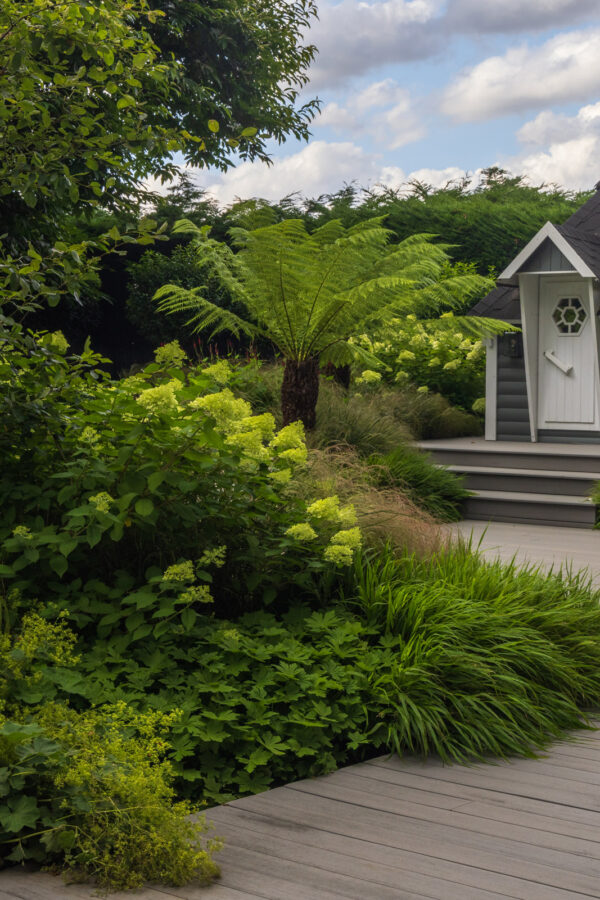
This beautiful family home on the edge of Norwich, was built amongst a number of wonderfully established trees, giving the site a woodland feel.
Read More
Suffolk Contemporary Cottage Garden
A contemporary retreat blending tradition with modern design.
Read More
Norfolk Contemporary Flint House
A beautiful, contemporary flint house situated in a small village in North Norfolk
Read More
Norfolk House in the Norfolk Broads
Beautiful thatched, brick farmhouse, situated in the heart of the Norfolk Broads.
Read More