

Garden beds have an enormous influence on how an outdoor space looks and how it feels. They introduce colour and texture while adding seasonal interest, but their role extends well beyond providing somewhere to grow plants.
The position and the scale of your beds can help define different areas of the garden and can soften hard landscaping, while creating a natural sense of movement through the space.
If you are wondering exactly how to design garden beds, it is always worth thinking beyond which plants you would like to grow, as the most successful beds begin with the structure of the garden itself and are designed as part of the wider landscape.
Start With the Overall Garden Layout
Before marking out individual beds, make sure that you are considering the garden as a whole.
Where are the main paths and seating areas? Which views do you want to really emphasise? Are there areas that you feel need screening? Where does the garden receive the most sun and shade throughout the day?
Thinking carefully about your garden layout first helps ensure that beds feel like an integral part of the design rather than spaces that have simply been left over between a lawn, patio and boundaries.
As an example, a generous planting bed beside a terrace can soften the transition between hard landscaping and lawn. A strategically positioned island bed might create a focal point or interrupt a large expanse of grass. Planting beside a pathway can make moving through the garden feel much more immersive.
The aim here is to give every bed a reason for being where it is.
Choose the Right Shape for Your Garden Beds
There is no one size fits all shape for a garden bed. Its form should respond to the wider style and geometry of the garden.
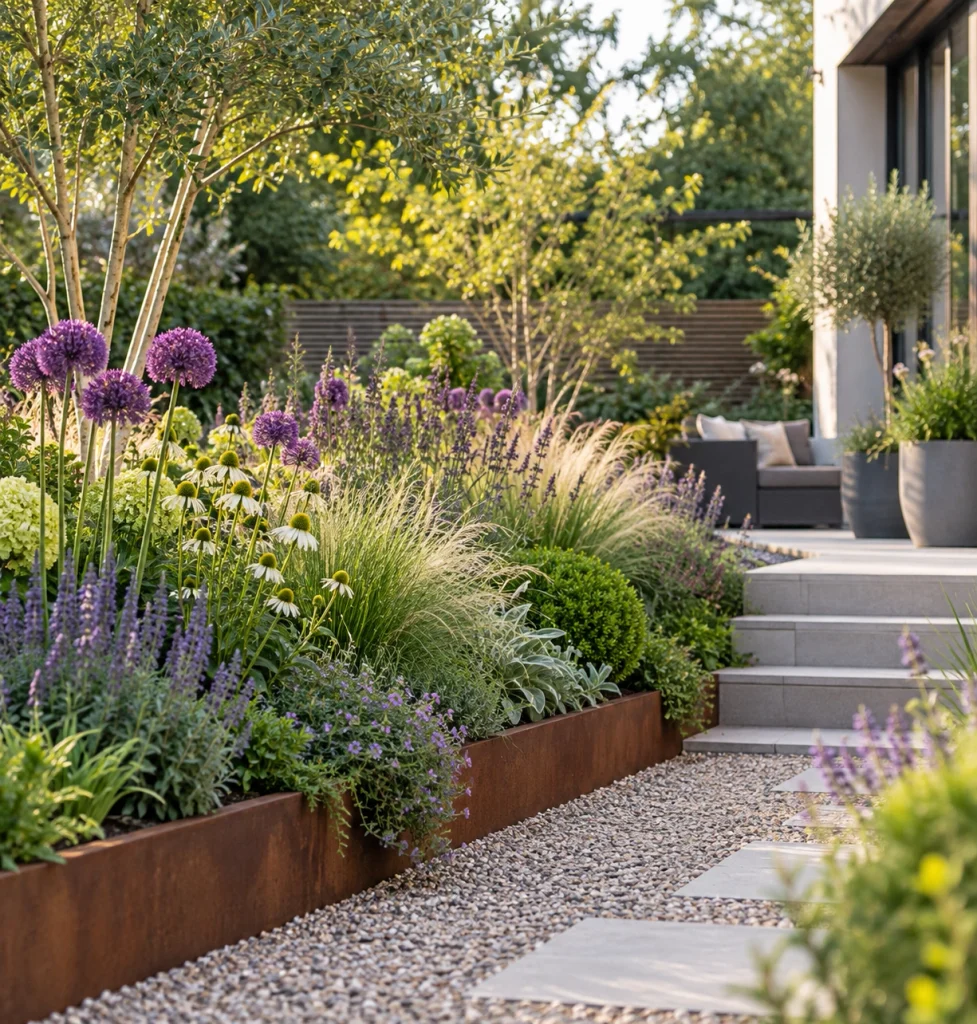
Straight lines and geometric beds can work particularly well in more formal and contemporary gardens, as they are great for creating a structure and can echo the lines of the house.
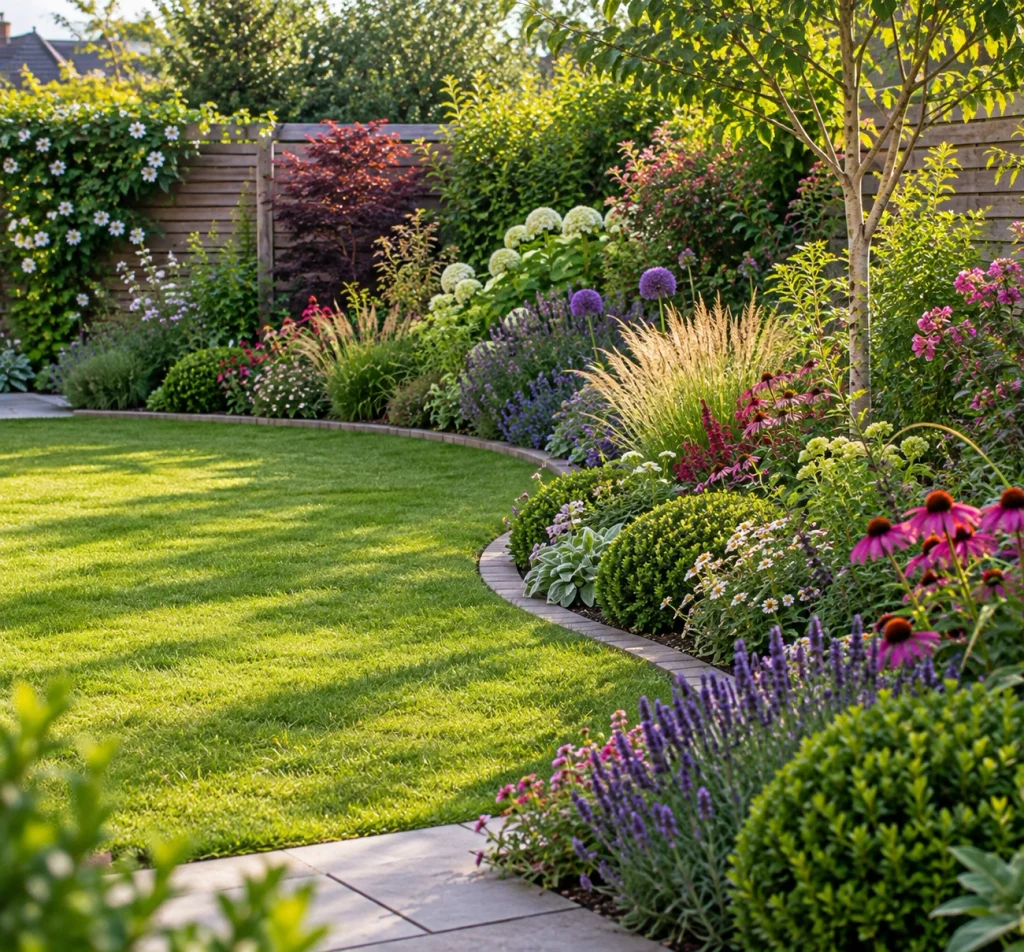
Curved beds create a softer effect, but curves need to be handled quite carefully, as having numerous small curves can make a garden feel unnecessarily busy. You will find that fewer, more confident sweeps usually produce a stronger result.
It can help to mark potential bed shapes using a hose, rope or temporary ground marking before committing to them. You can then view the proposed shape from different positions, including from inside the house.
Get the Proportions Right
One of the most common mistakes when it comes to designing garden beds is making them too narrow.
A narrow strip around the perimeter of a lawn may accommodate some plants, but it can be very difficult to create the depth and layering associated with a more established garden.
Deeper beds provide space for plants of different heights and forms. Larger shrubs and structural planting can sit towards the back or centre, with medium sized plants and lower planting arranged around them.
The appropriate depth will completely depend on the size of your garden. In a large Norfolk country garden, substantial beds may be needed to feel proportionate to the landscape. In a smaller garden in Norwich city centre, beds will naturally need to work harder within the available space.
The important thing is to always think about proportion rather than following a fixed measurement.
Think About How the Bed Will Be Viewed
Where you will see the garden bed from should influence how you design it.
A traditional bed that is positioned against a wall or a fence will more often than not be viewed primarily from the front, which naturally lends itself to taller plants towards the rear and progressively lower planting towards the front.
An island bed that is surrounded by lawn is a bit different as it can be viewed from many different directions. Taller structural plants can often occupy the centre, with lower planting arranged around them.
Never forget views from the house either. You may spend more time looking at certain beds through your kitchen, or your dining room windows than you actually do from the garden itself.
Good garden design considers these views from inside and outside together.
Create Structure Before Adding Colour
Colour is often what attracts people to particular plants, but structure is what holds a garden bed together.
Start by considering the plants that will provide its underlying form, as these might include evergreen shrubs, small trees, grasses or architectural plants.
You can then layer seasonal plants around this framework.
This approach helps prevent a garden from looking spectacular for a few weeks in summer but empty for much of the rest of the year.
When considering how to design a flower garden layout, make sure that you think about height and form, as contrasting foliage and plant shapes can be just as important as the flowers themselves.
Layer Plants to Create Depth
Layering is one of the most effective ways to make garden beds feel abundant without becoming chaotic.
In a bed that is viewed mostly from one side, this might call for taller structural plants at the back and medium height perennials through the middle, with your lower plants towards the front.
However, make sure that you avoid creating rigid rows.
Allow plants to overlap visually and repeat certain varieties at different points. Some taller plants can also sit further forward to break up the arrangement and create a more natural composition.
Repetition is particularly useful here, as using the same plant in several places gives the eye something familiar to follow and helps connect different areas of the bed.
If you are creating beds around the perimeter of your garden, my guide to [designing a garden border] explores this aspect of planting design in much more detail.
Consider Colour as Part of the Whole Garden
There are many ways to approach colour in a garden bed.
You might prefer a more restrained palette that uses variations of two or three colours, or a more exuberant mixture that changes throughout the year.
Neither approach is inherently better.
The important consideration here is how those colours will relate to each other and to the surroundings. The colour of the house and boundary materials, along with paving and existing plants can all influence what works.
A cottage-style garden, for example, may suit a broader and more informal mixture of flowers. If this is the character you are hoping to achieve, understanding how to design a cottage garden can help you develop a more cohesive planting style across the wider space.
Design Garden Beds for Every Season
A successful garden bed should not completely rely on summer flowers.
Always make sure that you consider what happens after those plants finish flowering. Evergreen foliage, seed heads, ornamental grasses, bark and interesting branch structures can all contribute well during the autumn and winter months.
Spring bulbs can then introduce early colour before many perennials have emerged properly.
Thinking seasonally does not mean every part of every bed needs to look spectacular throughout the year. Instead, aim to create a succession of interest so that different plants take prominence at different times.
This is particularly valuable in front gardens and areas visible from the house throughout the year.
Work With the Conditions You Have
Beautiful planting begins with choosing the plants that are well suited to the site, so before making your selections, understand the amount of sunlight each bed receives and the soil type, along with drainage and how exposed the area is to wind.
Conditions can vary considerably even within the same garden.
A south facing bed against a wall may be warm and dry, while a bed beneath mature trees could experience shade and competition for moisture.
Across Norfolk, local conditions can also vary from exposed coastal gardens to sheltered city plots and larger rural properties.
Working with these conditions rather than fighting against them will generally result in healthier plants and a garden that is easier to maintain.
How Do You Design Garden Beds in a Small Garden?
In a smaller space, it can be very tempting to make every bed as narrow as possible to preserve the lawn or patio.
Sometimes the opposite approach works better.
A smaller lawn surrounded by more generous planting can make the entire garden feel much richer and more immersive. Thoughtfully positioned beds can also obscure boundaries and can prevent you from seeing all of the garden at once, which can create a greater feeling of depth.
The key is to avoid trying to include everything, as a restricted plant palette and repeated varieties can create a calmer, more coherent result.
Think About Maintenance From the Beginning
The amount of maintenance a garden bed requires should reflect how much time you realistically want to spend looking after it.
Large numbers of different plants can require more individual attention, as repeating robust plants suited to your conditions can often simplify maintenance while creating a stronger visual effect.
Access is important too. Very deep beds need to be designed so that plants can be reached without repeatedly stepping through the planting.
Mulching and good soil preparation can also help suppress weeds and retain moisture.
Considering all of these practical details during the design stage can make the finished garden considerably more enjoyable to live with.
Bring the Garden Beds Into the Wider Design
The most successful garden beds do not exist completely independently from the rest of the garden.
Their shape can echo paths and terraces. Their planting can frame views from the house and trees and shrubs can connect the garden visually with the landscape beyond its boundaries.
This relationship between individual elements and the wider space is central to the approach at Chris Deakin Garden Design.
Whether I am designing a compact garden in Norwich or a larger landscape elsewhere in Norfolk, the aim is to create planting that feels naturally integrated into the overall composition rather than simply filling available areas with plants.
When shape, proportion, structure and planting are considered together, garden beds can transform how the entire outdoor space feels.
Frequently Asked Questions About Designing Garden Beds
How do I start designing a garden bed?
Begin by deciding what role the bed should play within your wider garden. Consider its location, sunlight, soil, surrounding features and how it will be viewed before choosing individual plants.
How wide should a garden bed be?
There is no fixed width that works for every garden. The bed should be deep enough to accommodate the type of planting you want while remaining proportionate to the overall space. Generous beds often allow for more effective layering than very narrow strips.
Should garden beds be straight or curved?
Both can work. Straight and geometric beds often suit formal or contemporary gardens, while sweeping curves can create a softer appearance. The shape should relate to the wider design of your garden and the architecture of your home.
How do I arrange plants in a garden bed?
Think about height, structure, texture, colour and seasonal interest. Taller plants often sit towards the back of beds viewed from one side, but avoid arranging everything in rigid rows. Repeating plants and allowing them to overlap visually can create a more natural result.
How many different plants should I put in a garden bed?
There is no ideal number. In many cases, using fewer varieties and repeating them throughout the bed creates a stronger and more cohesive design than using a large number of individual plants.
How can I make garden beds look good all year?
Combine seasonal flowers with plants that provide longer lasting structure. Evergreen shrubs, grasses, trees, interesting foliage, seed heads and spring bulbs can all help maintain interest at different times of year.
How can I make my garden beds easier to maintain?
Choose plants suited to your soil and growing conditions, avoid unnecessary complexity and ensure you can easily access the bed. Good soil preparation, mulching and repeating reliable plant varieties can also reduce ongoing maintenance.
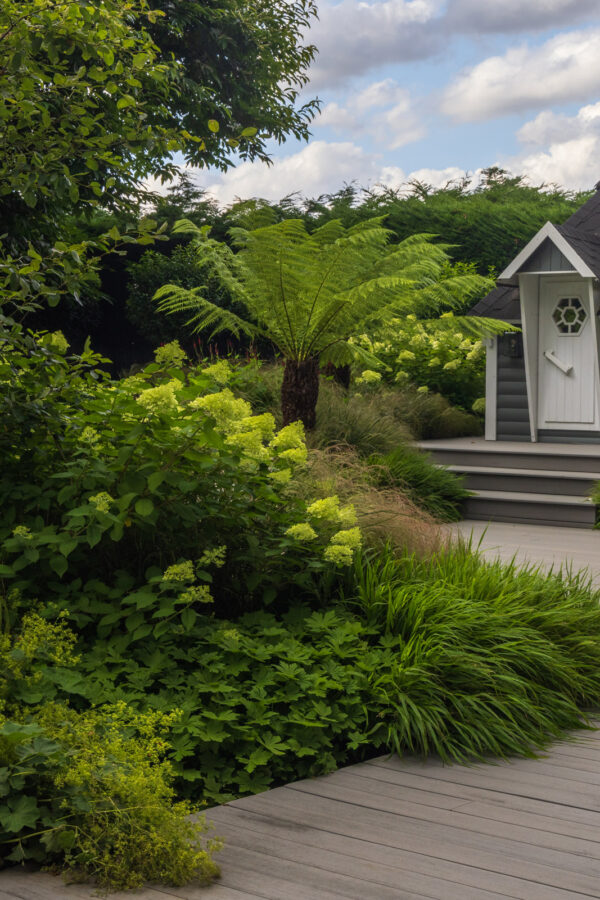
Norfolk Woodland Garden
This beautiful family home on the edge of Norwich, was built amongst a number of wonderfully established trees, giving the site a woodland feel.
Read More
Suffolk Contemporary Cottage Garden
A contemporary retreat blending tradition with modern design.
Read More
Norfolk Contemporary Flint House
A beautiful, contemporary flint house situated in a small village in North Norfolk
Read More
Norfolk House in the Norfolk Broads
Beautiful thatched, brick farmhouse, situated in the heart of the Norfolk Broads.
Read More